Episode Transcript
[00:00:05] Speaker A: Welcome to Monument Matters, a podcast produced by the Monument Builders of North America for all things memorialization.
Each episode is an extension of our monthly magazine, MB News. Monument Matters invites everyone to listen and share. You'll find all of the episodes on Apple, Spotify, and YouTube.
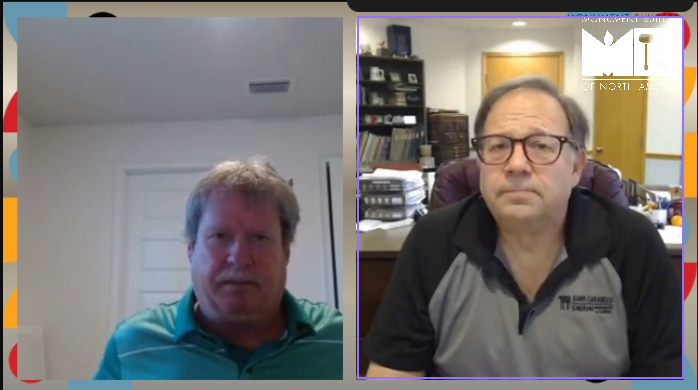
[00:00:25] Speaker B: I'm your host, Mike John Cmaica from the Johns Carabelli Company, Cimarano Monuments and Flowers in Cleveland, Ohio. I'm also a past president of the Monument Builders of North America Today. And in the November issue of NB News, we'll be learning about how to take your veterans memorial to the next level.
With me today is Bill Beagle. Bill is founder and CEO of World War II Research, Inc. An associate member of MBNA and a professional research agency specializing in military records of American veterans and casualties from World War II, Korea and Vietnam. Hi, Bill. Welcome to our podcast.
[00:01:06] Speaker C: Hi. Good morning, Mike.
[00:01:08] Speaker B: So, Bill, your firm, V2 Research, Inc, offers a valuable service to veterans families. Can you tell us about how you became involved in this type of research?
[00:01:16] Speaker C: Yeah, I became involved in this kind of research in a indirect way. My dad, who was a Korean War vet, had grown up during World War II and had a cousin that lived with his family. And his cousin was reported to be missing in action over Germany, 1943. And that was all my dad ever knew. And this cousin was kind of a brother to him. So he knew I had been a history major in college and said, hey, can you play around with some government records and see if you can find out whatever happened to my cousin? And I said, sure. And it turned out that his cousin never made it to combat. They were flying a B17 from a place called Gander Bay, Newfoundland, to England. And their B17 and two others went down in an ice storm, all 30 guys in those three planes missing in action, never to be seen again. And so when I reported that to my dad, he was.
He wasn't thrilled, exactly, but he was very grateful to know what had really happened to his cousin.
And, you know, it turned out there were many letters in the file that related to his family, and it was a great experience.
And so I thought, I bet there are a whole lot of other people that want to find out this same kind of stuff. And it turned out I was right.
[00:02:32] Speaker B: Well, very interesting. I think that, you know, knowing something bad happened is often better than not knowing exactly what happened for sure.
[00:02:43] Speaker C: Right, right, right.
[00:02:45] Speaker B: So what are some of the unique challenges monument builders face when creating veterans memorials?
[00:02:50] Speaker C: Yeah, so monument builders face an incredibly difficult task. You're being asked to create something Permanent.
Something literally carved in stone that honors heroes from conflicts that happened 50, 60, 80, 85 years ago. And of course, these monuments must be complete and accurate. The names must be spelled right, and all those things must be included.
So when these monuments are built, the standard practice seems to be logical. Community groups ask the public to submit names. Local volunteers, historical society members respond. They go through old newspapers, you know, newspapers.com to see what they can find about those things. And these memorial committees spend months, months and even years on these lists. But here's the challenge. It's impossible to get it completely right by doing it that way.
For example, family stories get muddled across generations. And one that's has stayed with me for years is I researched someone whose family believed that he had been killed in action in a plane crash in Ireland. And we found out that in fact, the plane crash was in New Ireland, which is an island in the Pacific.
And so that's just a little example of how far off people can get. And then a lot of the casualties that we might call non battle casualties are forgotten. You know, guys that are killed in plane crashes and training stateside or somebody overseas in the Philippines gets sick with malaria. So these fallen heroes are forgotten, and they deserve to be included as much as anybody. But their names often don't make it onto the memorial.
And then there's the heartbreak of discovering errors after the fact, names misspelled. And that was one of the things that happened in Brownsville. About 60% of the guys on their wall were of Hispanic background. And the guys that built the wall were not very careful with spelling their last names. And so, you know, that's bad. And then you'll get the wrong rank. Somebody was a sergeant and they put him in as a private or vice versa, and the wrong dates.
And I've seen memorials where a family member visits and finds the loved one's name carved incorrectly into the stone. But here's what really keeps me up at night. Thousands of communities across America still have no memorial at all, as I'm sure you know, no place where people can gather to remember the neighbors, students, sons and daughters who helped save the world. Their heroes have been forgotten.
And I know that the monument builders take this responsibility incredibly seriously. They understand they're created what we could call sacred space, but they're working with incomplete information.
And most people simply don't know. There's another way that professional researchers can locate the official records that still exist and go from there.
So that's where the partnership becomes so important, when monument builders and researchers work together from the beginning.
We can ensure that every rightful name is included, correctly spelled, and ultimately that every name has its story preserved.
[00:06:02] Speaker B: Things you don't think about, right?
[00:06:03] Speaker C: No, you don't. And why would you?
You would think, sure, there are lists everywhere, but there aren't.
[00:06:12] Speaker B: From the position of a monument builder, you know, we would expect that the body that is purchasing this work has done their research and their homework and the information that they've provided is as correct as as they can possibly make it. So we, you know, kind of go on faith to a certain extent, because what more we do, but apparently there is more. So for those builders listening, what would partnering with a researcher like you actually look like during a memorial project or when helping families go bey the names to tell full human stories?
[00:06:50] Speaker C: You bet.
So the kind of partnership you're talking about typically unfolds in phases.
And monument builders remain at the center of the entire process.
You're the ones who understand the community, you're the ones that are being compensated by the community. And you also understand the sacred nature of what's being done. Phase one blueprint, we might call it. We start by understanding what you need. What does the community want to honor?
And for example, a certain town might say, we want to honor everybody in the town. But another town might say we only want to include the guys that went to high school in the town. And you know, what's the, you know, what's the dividing line going to be? And that, that of course, is a very minor one.
What records already exist, what's the timeline? We create what I call a digital expansion blueprint.
A complete plan for the research, the timeline and the costs. And that gives everybody clarity before any major commitments are made. So that's the blueprint. Phase two, verified casualty lists. This is foundational.
We use official military casualty records, not crowdsourcing, to create the complete list of names that should appear on the memorial. Every name verified, every name correctly spelled.
We ensure non battle casualties are included. The training, accident victims, those who died of illness, all those heroes who gave their lives. And a good example there is. I was contacted by a very large city in California. They had about 70 names that they wanted to put on their memorial that they were building for the city. And they asked me one specific name who they couldn't find anything about. Well, I knew that city was a very large city. And I said to them, you guys, if you think you only have 70, that should go on that memorial, you're going to be clobbered when that thing Gets built and everybody finds that their names aren't on there. So they, the city actually hired me and we came up with almost 300 names. So they were starting with 70. And we, you know, so you can imagine the blowback they would have gotten when they would have left out three quarters of the names.
[00:08:58] Speaker B: Sure, right.
Yeah, absolutely.
Yeah.
[00:09:03] Speaker C: Right. So next, what we call kind of gathering the stories. So despite the 1973 fire at the National Personnel Records center in St. Louis, which destroyed a lot of records, and calling it a lot of records is an understatement. It destroyed millions of pages of old onion skin, you know, paper that had been sitting there for, you know, almost 30 years.
However, good records still exist.
Casualty records, unit records, and incident records of various kinds.
Some of these records include extremely personal content, like correspondence between the families in the War Department. And some of these letters, just as a matter of interest to everybody, are heartbreaking. You know, there are people writing to say, I don't believe that he's really dead. I think you found the wrong guy.
Or, you know, he was only there for a month. How can he be dead? And of course, all the horrible questions that people would ask.
And so we can locate these kind of memorials and create what we would call a digital memory chest for each person honored on the memorial. The client, whether it's a city, a town, university, veterans group, owns the collection, making them the authoritative source about their fallen heroes.
[00:10:20] Speaker B: So how do you manage to include those maybe that didn't die while they were serving, that served, but died after?
[00:10:27] Speaker C: Absolutely. So we're fortunate because when the army and the Air Corps, and the Air Corps was still part of the army during World War II, when they wrote their casualty lists at the end of the war about In July of 1946, they published their casualty list to all the newspapers across the country.
And on their lists they described the type of death. So next to the guy's name and it will say killed in action, or it might say missing, or it might say dnb, which stands for Die non Battle. And so that's how we're able to find those non battle guys. And the very unfortunate thing is that back during the war years, these guys were often forgotten, not included on the list. And so that's why, you know, it's so important that we do that. So that's a way that we are able to find those non battle guys.
[00:11:16] Speaker B: So are you also, just to be clear, I served during World War II. I was discharged. I made it through all of that. And even though I served I lived through it and died later. Are those. How do you grab those folks?
[00:11:31] Speaker C: Yeah, those are a very good question. Part of the way we are able to find these is that enlistment records for most of the men who served in the army and the Air Corps or online from the National Archives. And if we can get a guy's service number, then we can recreate his history, because we can go back and look at the records that were compiled at the unit level. So a tank battalion or a field artillery group or a fighter squadron, all those different units kept great records. And so if we know a guy's name and we know his service number, we can typically back into those unit records and say, yeah, this guy was a fighter ace, shot down 20 German planes, and this guy was in the Marines on Okinawa. And, of course, these are all guys that survived.
And really, the majority of the work we do is for guys who survived, because In World War II, 15 to 16 million people served, about 400,000 died, about 600,000 wounded. So most who served, of course, did survive. And that's, you know, that's a lot of the work we do.
[00:12:34] Speaker B: Got it. So without getting into specifics, can you give me an idea, a range of what this type of service would cost either the community or the monument builder? How do you. How do you.
[00:12:47] Speaker C: Yeah, that's a great question. And, of course, it would depend.
You know, it would depend on how many individuals we were talking about, Right. Because some. There are some towns where they might only have 20 or 30 names. And like our city in California, or like the project I did for my alma mater, ucla, you can have hundreds of names.
So what we would typically do is come up with a per person price.
It could be something like $150. It could be more, it could be less. It might depend on how much information they already have.
And in the case of the California project I did, we charged a bit more because they were so far behind the curve that we had to basically put that project at the top, and everything else went on the wayside, but it's in that range. And of course, we're always very careful to make sure that we understand the budget of who we're working with and that sort of thing.
[00:13:41] Speaker B: So what are some simple, respectful ways monument builders can use techniques like digital markers or QR codes to expand the memorial experience without losing the emotional impact of the stone?
[00:13:55] Speaker C: You bet. You bet. So this is where we work with monument builders to bring in the experience to life. And we were at an MBNA conference in San Diego at the beginning of 2024, where we met a gentleman named Tanner Lewis who works for Porcelains Unlimited and Eternal Timekeepers. It's the name of their company.
And let's sort of imagine this. A visitor stands before a wall, or perhaps before a headstone. They tap their smartphone against the secure marker, which is. It doesn't show on the headstone, so it doesn't blemish it at all, but it's there. And so a visitor stands before the wall, taps a smartphone against a secure marker, and suddenly discovers the history of the guy that's on that marker. And so we, you know, we did one recently where we found this guy played in a junior hockey league in his hometown before he was killed in the war. Another guy who had a baby daughter who he never met or somewhere, or a case of a mother who moved heaven and earth trying to find where her son's plane went down. All that can be put onto the monument. So, you know, you can get their whole story almost just by putting your smartphone against that.
And here's what monument builders tell me. This approach actually creates more opportunities.
Communities see enhanced vision and increased engagement. Donors see meaningful impact.
Families who once visited to pay respects now return to show younger generations to discover new details, to add their own memories to the digital collection. And really, you're not building walls. You're creating spaces where the past speaks to the present.
And then I can tell you a little more about some of the technology of that, too.
[00:15:42] Speaker B: Yeah. If you'd like to elaborate. Absolutely.
[00:15:45] Speaker C: Yeah, you bet. So this is where a lot of people get nervous, and rightfully so, because nobody wants a memorial to look like a smartphone store. Right. The stone itself, the names carved, the weight of the material, the solemnity of touching those engraved letters is sacred.
Technology should never disrupt that experience. It should deepen it.
So here's where our partner Tanner Lewis and his companies really shine.
They use secure nfc, which stands for Near Field Communication Technology Through Eternal Timekeepers. It's the same technology in your credit card for tap to pay.
So why does this matter? Two reasons. First, security.
QR codes in public spaces are frequently hijacked.
Someone can put a sticker with a malicious QR code right over yours. And visitors get directed to spam. Sites are worse with NFC markers. That's impossible. The technology is embedded and secure.
Visitors always go exactly where you intend to. The memorial's own digital collection, never to some random website. And then, of course, aesthetics. Nobody wants to see a blob of computer code on a beautiful memorial.
Qr codes are ugly.
They scream technology in a space that should feel timeless. So different ways that this can be done. Options where we would say we place the markers on a discrete stand or pillars near the memorial wall. The stone remains untouched, pristine and exactly as you designed it. Visitors experience the memorial first and then can choose to explore the digital stories. Or an alternative way is to design a beautiful porcelain marker that can be integrated near the memorial. This can be done through monument builders own capabilities or through a partner like Porcelain's Unlimited.
They aren't tech looking devices. They're artistic elements that complement the memorial design.
The design is entirely up to the artists and the client.
They honor the aesthetic while providing the access point.
So imagine this.
A grandmother brings her teenage son, her teenage grandson to the memorial. They stand before the wall together.
She points to a name her uncle killed at age 21.
The grandson takes out his phone, taps it against the marker and suddenly he's reading his great, great uncle's actual military records. He might see a photo.
He reads what happened on that final mission over the Caribbean in February of 1945.
He discovers his great uncle was on the baseball team in high school. Or on the yearbook.
That teenager just went from some old name, I should say that young 21 year old just went from some old name to a real person who was once the same age as that young teenager. That's the transformation. And the family learns more about their loved ones, the ones whose contributions literally save the world. And the last thing I'll say is that the key principle here is respecting the sacred.
The memorial wall remains the primary experience. It's still about standing there, touching the name, feeling that connection.
The technology doesn't replace the moment, it extends.
Lets the moment continue after the visitor leaves. Lets them return and discover more.
Lets them share what they've learned from others.
Done right, technology doesn't diminish the emotional impact of the stone. It amplifies it.
[00:19:26] Speaker B: Amazing. So as someone who's a family member has been memorialized in that way, do I have an opportunity to add to that record? And how does that work?
[00:19:42] Speaker C: Yeah, you know, I'm not the expert on the technology here, but I'm fairly confident that that can be done.
Yeah, I'm fairly confident that that can be done. And you know, I suppose you could even take something out if it was an error.
[00:19:54] Speaker B: Sure. Okay. You're the researcher, not the, not the tech guy. Got it.
[00:19:59] Speaker C: By and large, we've got a great partner. But yeah, I'm the guy that digs into the paper. Right.
[00:20:03] Speaker B: Okay. Understood. So what's your vision of the memorial of the future? One that honors history while inviting ongoing discovery.
[00:20:11] Speaker C: So I see memorials becoming something more dynamic while remaining deeply rooted in the permanence and solemnity of stone.
It starts with getting the names right. And again, my vision of the memorial of the future says, we're going to get the names right. They're going to be spelled right. We're going to include their appropriate military rank, if that's what they want to do. And we're going to include the day they died, if that's what they want.
So every memorial of the future begins with a verified casualty list created from official military records.
No more discovering five years later that someone was left off. And I've seen that happen before in a few cases, and I'm sure you have, and it's not a good experience. No more misspelled names. Every rightful name honored correctly from day one. The memorial itself owns the complete collection of records for every person honored there. Not scattered across some archives, not hidden in file boxes in somebody's attic.
The memorial is the authoritative source. When someone wants to know about their grandfather who's named on the wall, the memorial can say, we have his complete military file. We can tell you his story. Interactive discovery. Visitors can explore at their own pace and depth. Maybe you just want to see where your uncle served and how he died. Or maybe you want to read every letter he wrote home.
Maybe you want to understand the entire list of the battles he fought in the memorial accommodates all of that.
And we could talk about community contribution, which really excites me. Families can add to the digital collection. Did you find a photo of your grandfather in his uniform? Add it. So this is answering your earlier question. Did your grandmother save his letters? And I come across clients all the time where that happened. Share those letters. The memorial grows richer with each generation.
[00:22:04] Speaker B: Yeah.
[00:22:05] Speaker C: And now the bigger mission.
Yeah. So the bigger mission is this. And this is what I really dream about. So here's what I really dream about.
Thousands of cities and towns across America still have no memorial at all. None. They're World War II veterans. They're Korean War veterans. They're Vietnam War dead. No place to remember them. No place to honor them. And they're being forgotten.
The memorial of the future isn't just about making existing memorials better. It's about partnership. Monument builders and researchers working together to create new memorials where none exist.
To ensure that every community can honor their heroes and to make sure that every name that deserves to be remembered is remembered. That's the future I'm working toward and I'd love to partner with the monument builders listening today to make it real.
And at the end of the day, the memorial of the future answers the question that visitors ask me in the past all the time. Who was he really?
Not just his name, not just the dates, who he was, who he loved, who loved him and what he sacrificed. Because that's what we owe the names. We engrave nothing less than the complete truth of who they were.
[00:23:21] Speaker B: It's a lofty goal and I think we're a lot closer to that being reality as technology develops and advances. For sure.
[00:23:30] Speaker C: Yeah, I certainly hope so. You know, and these, these memorials really are something as you know, you know, you get the names up there and you know, the community does a great newspaper article and they, the local TV station comes in and it's, it's all, it's great. So, you know, for any monument builders listening, if you're working on a veterans memorial or if you're in a community that needs one, I would love to hear from you.
Whether you've got questions about the research process, a project in the works I might be able to already help with, or if you just want to explore how we might collaborate to bring more memorials into existence, please reach out.
[00:24:06] Speaker B: Well, Bill, I certainly appreciate that and applaud you for your efforts. You know, there are fewer and fewer of these veterans around and it changes every day. I had a friend who's father just died last week at 101.
Wow. He served on Arizona.
[00:24:29] Speaker C: Oh my gosh, what a story that must be, right?
[00:24:33] Speaker B: A lot of stories. A lot of stories. And, and there's, I think now he was one of eight that were called back for ceremony just recently. And since then he and two others since passed away.
So you know, five or, or whatever the number is. There's not very many.
[00:24:54] Speaker C: Right.
[00:24:55] Speaker B: So, so.
[00:24:56] Speaker C: Well, and not only that, but the, the, you know, the sons and daughters of World War II veterans are not young people anymore either.
[00:25:03] Speaker B: No, that's right.
That's right.
Well, Bill, I want to thank you for taking time today to be our guest and I want to thank all of you in ether who are our audience for Take a time out to listen. The November issue ME News has an article from Bill. I encourage you to read this issue and review the World War II research website. And if you have a topic you'd like to have covered in a future podcast, please leave a comment.
So again, thank you for listening to monument matters. MB&A invites you to stay connected through Facebook and LinkedIn. You can find out more about membership or the upcoming 2026 MB University in Fort Worth by visiting www.monumentbuilders.org. for MBNA, I'm Michael Johns. Thank you for taking time out of your day to listen for comments and feedback. Please drop A note to infoonumentbuilders.org Again, Bill, thanks for joining us. Really appreciate it.
[00:26:02] Speaker C: Thank you, Mike. You're welcome. Take care.
[00:26:04] Speaker B: All right, you too. Bye.