Episode Transcript
[00:00:05] Speaker A: Welcome to Monument Matters, a podcast produced by the Monument Builders of North America for all things memorialization.
Each episode is an extension of our monthly magazine, MB News. Monument Matters invites everyone to listen and share. You'll find all of the episodes on Apple, Spotify and YouTube.
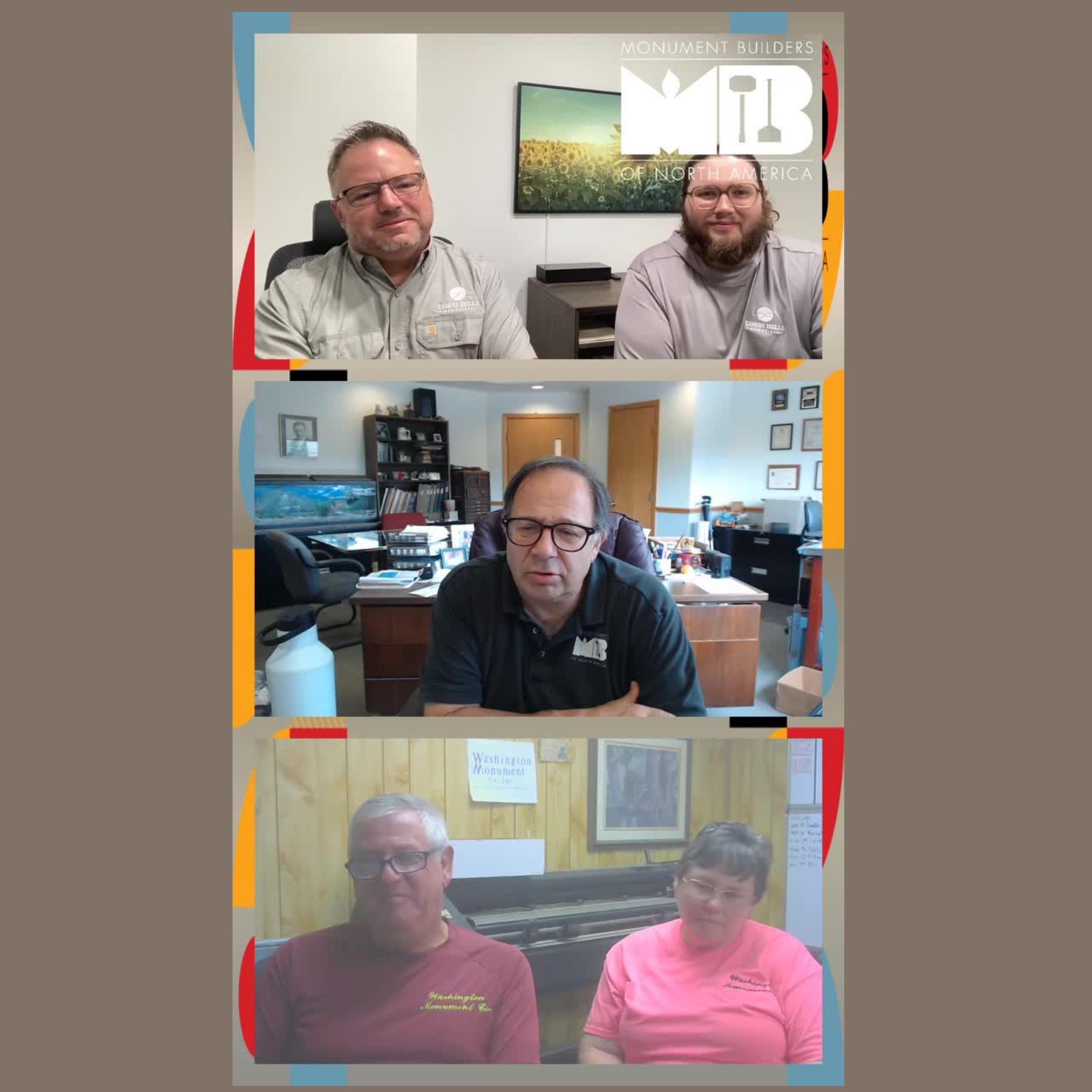
[00:00:25] Speaker B: I'm your host, Mike Johns, CM, AICA from the Johns Carabelli Company, Cimorano Monuments and Flowers in beautiful sunny Cleveland, Ohio. I'm also a past president of the Monument Builders of North America. Today's podcast is kind of unique. The topic is keeping the monument industry connected and supported.
I'm talking with Tony Watson and Austin Keys, co hosts of the We Rock podcast.
Founded in 2023 and now in season four, the podcast is dedicated to conversations surrounding the memorial, art industry, education, relationships, and the future of monument building. We're not going to get into relationships. Too personal.
Tony and Austin are members of mbna. Great for that. Thank you so much. And active in Southern Monument Builders association as well.
This is the first podcast crossover for Monument Matters, and we appreciate them joining us for conversation about industry connections, association involvement, and where the industry is headed. So good morning, Tony and Austin. Thanks for helping us create this joint podcast and we happy to be here.
[00:01:36] Speaker A: I will say it seems it's a little off because usually we always start with, hey, welcome to the We Rock Podcast. And. But we're talking about some nonsense before we hit record or whatever. So it's a. It's a little different for us, but, you know, it's fine. Different's good.
[00:01:50] Speaker B: We'll try to. We'll try to teach you how it's done in.
[00:01:57] Speaker C: That's why we're here.
[00:01:59] Speaker B: So I think this one's going to be a lot of fun. So thank you for joining.
[00:02:04] Speaker A: Well, and that was one of the big things when we kind of talked, when I talked to you about it at Hard Rocks. And the idea is that, you know, there's. There's different shows and I think I jokingly said that there's, you know, some folks that will watch Seinfeld and some will watch, you know, NCIS or whatever. I mean, we're different shows and different things, and y' all cover a lot about the magazine. The fortunate thing for us is because we're not directly affiliated with anybody and because Austin's independently wealthy and funds everything, we're able to say kind of really what we want and not have to worry about anything. So it works well where.
[00:02:39] Speaker B: And I think that we have a lot of flexibility on our side, too. You know, as we said, the primary focus is everything that had to do with memorialization and our industry. No topic is, is too big or too small. But today I think we're going to primarily focus on membership and associations and primarily membership in mbna.
So we'll talk about, let's say, let's start from your perspective.
What changes have you seen from MBNA in recent years that have increased member value?
[00:03:12] Speaker A: I'll say, you know, I try to. When we, because we've talked about it, we, we've had on our show, we had Matt early on going through some tumultuous times or whatever and not really hitting on it. But I always kind of feel like it's important to talk about certain things because you go. You can't understand how to learn how to fix things unless you go through it. Matt did a great job of kind of taking things in, in a bit of turmoil and, and kind of holding the ship together. And then come in and you've got Nathan Lang who just left. And Nathan did a phenomenal job of kind of getting everybody back on their being value and really trying to push there being something of value for everybody. I mean, and for the, the sake of just complete transparency. For a while there, we had dropped our membership at Watson and, and we came back after, you know, having the, this last convention as well as seeing all the things that have been done and they're being value and being efforts being made. Not that there wasn't efforts being made before, but they're being efforts made or whatever to really just push it hard to get education out, which is stuff like this. The, the force of. I think in. Is it today, the day that Jed's got his webinar. I think that's right.
But stuff like that, you know, there's, there's things that are, that are going out there to get out education and even beyond just regular MBA MBA members to help the industry grow and some of these new guys to learn stuff that we're afraid it's going to get forgotten at some point.
[00:04:38] Speaker B: Sure. Well, I'll say that, you know that education has always been MB&A's primary focus.
But over the last several years, you know, when you go back to when we had advanced management concepts, being our partner in running the association, it got to the point where the volunteers were really doing too much of the heavy lifting and trying to manage the association instead of working on the programs that the association was trying to offer. And so the smartest thing that the board did was finally align themselves with the folks at the Rayborn Group. Their Support was. Has really turned this association upside down and got it moving in a much more positive direction.
[00:05:36] Speaker A: Not only that, but, I mean, even from our perspective, you know, of course, Austin's the. The vice president of Southern Monument Builders. I've been on the board for. And actually, I can tell you exactly how long I've been on the board for. For Southern. It is 14, will be 15 years this year. And the reason I know that is because it was two weeks prior to James being born that I was brought on.
So my, my tenure, I guess, can almost drive. But it's.
But in seeing some of the things that are. That they're doing even well for us is stuff like going over our contracts with our hotels to make sure that we're getting a good deal and stuff. I know that we discussed that in a recent board meeting for us, and they found things that, hey, now, this is a good contract. Let's maybe make some concessions here or get them to kind of make the concessions towards you.
And those things are super valuable and they get forgotten a lot.
[00:06:26] Speaker C: And that's one thing that I've noticed, especially within the past few years, especially from MBNA's perspective, that they have become a lot more engaging with the membership and also the regional associations trying to tie all this together and not treat us as like we're in all these individual silos, but we're part of something larger.
[00:06:44] Speaker B: Yes, and I think that's always been the aspirational goal of mbna. But as I indicated before, for a number of reasons, we just didn't have the bandwidth to get that message messaging across to members, to members of our own association, as well as members to the regional associations. But again, thanks to, you know, the folks at Rayburn, the MBNA Board of Volunteers are no longer the smartest people in the room. That, I mean, honestly. Yeah, I think you know what I mean by that. But they are.
[00:07:19] Speaker A: No, it is. It's funny to hear, but, you know, it's because we would say that in jest all the time, but no, the seriousness of it is, Is true. Right. It's because there are, There, there's some super highly intelligent individuals within MBNA's board, and they're great people. I, I've spoke highly of all of them for, for quite some time, and until I'm drinking with them or having a good time with them, and then, then that's a different animal.
[00:07:40] Speaker B: Sure.
[00:07:41] Speaker A: But nevertheless, I mean, you can only be. The statement I made once upon a time was the smartest individual the room or the Smartest individual is not as smart as the collective of people that are not as intelligent as the one individual, because you have more ideas. You have more people, even with less intelligence, more people that can produce more ideas than one person. And bringing in this new group to be able to help y', all, they have perspectives that y' all have never seen.
And y' all run monument companies. You don't run conventions. And what are you supposed to do? You. I mean, in the middle of. As we're getting ready for this, I'm trying to direct guys and say, okay, well, you've got to go over here and take care of this job, and you need to go do this and that, and. And there's steps involved in all of this. So I don't have time to run our stuff.
[00:08:32] Speaker B: No, for sure. And I. I just want to. I just want to correct you on one small point, because I think this is really the crux of. Of MBNA and what MBNA is trying to do. It's not what they're doing, it's what we're doing collectively.
[00:08:49] Speaker A: Because, yeah, I think that. Yeah, yeah, yeah.
[00:08:52] Speaker B: The board is made up of members of the association. They're not somebody else. They're folks that are taking their time to help all the other monument builders that are members of mbna. So when you say it's them, it is to a very small degree. But the way the association is built, with 10 trustees, those trustees represent different areas across the country, and the goal is for them to be bringing the needs and wants of the members to the attention of the board. And conversely, it's their responsibility to bring back to the membership what the board is thinking and trying to do to better the association. And ultimately, all the members that are part of the association, really non members as well. You know, it's not exclusive.
[00:09:49] Speaker A: Yeah. I think the best way to describe the way the trustees should function and correct me if I'm wrong but is they're more like. And not to get into a politics today, but they're like our congressmen, right? They. They go. They are going to represent us as. As local area, because what works here in Central Texas and in Louisiana, which is kind of our. Which is where our district is, does not necessarily work in Utah. It does not work in California. You know, of course, we. I talked to guys like Jed and Bobby Maddows, and you talk to the stuff that see the stuff that they produce, and it's like flat markers galore.
You know, man, I don't know that we sell maybe 15 flat markers a year.
[00:10:30] Speaker B: But the. There's. So I learned something a long time ago.
I did this training through 10,000 small businesses, and it was a group of 40 entrepreneurs, all different businesses. No two businesses were the same. And when we started off, we thought, how are we going to learn anything out of this program? Because we're all different.
We're all doing different things. But the bottom line is there's a lot of. Of basics that are the same. So it doesn't matter what part of the country you're in for. Some of the basics. Right. There's overlap. Yes. There's specific issues in your market or my market or someone else's market that might be unique to my market. But the majority of the things that we deal with are fairly universal. You know what I mean?
[00:11:20] Speaker A: 100%. I mean, that's why I always kind of go there. There's certain things that I.
I tend to go. I'm not interested in hearing or whatever. Mostly because the nuances of a local situation. Right. Hey, how to save money on power. I'm like, man, Austin up there, are y' all on where you can buy your power through different suppliers? Is that right?
[00:11:39] Speaker C: Okay. Yes.
[00:11:40] Speaker A: So I'm not. We're. We. We are co op because we're rural enough and. And you don't have an option BTU only.
So, you know, certain things like that, that doesn't necessarily translate, however, how you're taking care of your employees does, how you approach a customer in your contract stuff, contract law, all of those little things that we're gonna go even. And that's whether you're not building monuments or you're, I don't know, a daycare. You know, some of those things just function as a business owner, not necessarily a specific business. So you're. I agree.
[00:12:14] Speaker C: Yeah. And one thing that I found, especially with networking with people around here, is even though the people that I'm networking with in my area might be in a completely different industry than I am. But if you look at things from a logistical standpoint, a lot of them, they're still having to have things shipped in the same way we are. And then you find that they run into some of the same issues that we do, such as they're trying to fill out a truck somewhere that's coming through an area that I possibly need something picked up from, and it's just making all those connections and understanding that even though we're in totally different sectors of business, but yet there's a lot of things that we can network together.
[00:12:50] Speaker A: With.
[00:12:50] Speaker C: And we can see mutual benefit.
[00:12:53] Speaker A: Yeah. Which is what a big reason why we've always talked about education on that stuff. With our stuff, you know, we. It seems to be pretty routine that we're promoting. Of course, we've promoted mbna. We've promoted. And I don't mean that because we're on here with you. I care less, but we promoted MBNA and all the other regional associations. We want people to go to these things. And we've heard so many times. And you have. You've been in this industry long enough so that people go, what?
Yeah, what is it? What does it mean? I can't get it. I'm already doing all that stuff or whatever. Like, yeah, maybe those guys have already made the mistakes before you're going to make them or.
[00:13:25] Speaker B: Exactly. I think, you know, we talk about when it comes time for membership renewal, when it comes time for trying to grow the association, whether it's your regional association or the national association, the whole. What's in it for me? Right.
And, yes, what's in it for me is important. And it's important for an association to be able to delineate some of those things. And I'm going to touch on some of those points for us in a minute. But the number one thing, and I think that you'll agree, is the relationships, Right. It's the ability to connect with other people in your business that have, like we said, faced similar circumstances or situations and, you know, just the ability to compare notes, to ask a question, to find someone that maybe has done it before, maybe has done it right before, maybe has done it wrong before. Because, you know, I don't know about you, but I tend to learn more from the things that went wrong.
[00:14:37] Speaker A: Yeah.
[00:14:38] Speaker C: Oh, yeah.
[00:14:39] Speaker A: Well, and that's, you know, of course there's this. A lot of this all stems for me from, you know, my start whenever I kind of started in on my own shop. So we started our shop in 2006. So this year is 20 years. So in, in 2006, when I went and started my shop up and started running, I started missing the things that I wasn't getting regularly with the conventions. Right. Whether it was MBNA or at that, back then, it was MBSW for, for us. And I started missing that camaraderie that we would get where we could have these conversations. And I'm trying to learn how to build a business. And so that's where the Monument Builders Facebook group came from, that we started in 2009. And so it's built a Lot of that communication that you could have instantly.
[00:15:23] Speaker B: Right.
[00:15:23] Speaker A: You were able to get to those questions and hear those things and hear what people did. And I started just living on those things. And so now, of course, now that there's so many people, I hear people go, well, I don't want to post my stuff because I don't want it.
People saying poor things about it. I do, which is why I hang out with people like you, Mike. And, you know, when we go to hard rocks and things.
But, you know, I. I say all this stuff in jest and, And I. The best way I always put it is Kaz always gets on to me about some of the stuff that he'll see that we produce. And it's like, well, why didn't you do this? I need that, because if I don't know where I'm doing something wrong, I can never improve it. And so the joke has been around here, you can't hurt my feelings because you don't really know who my friends are. I promise you, I. I sit and talk with people like Jason Campbell and, and Austin G. And I, and I promise you they're going to find a way to dig that in and twist it.
[00:16:17] Speaker C: Yeah, well, that's one thing that's hard to get across to people, especially whenever we talk about trying to grow the membership of, whether it be nbna, S, N, B, A, anything like that. And they say, well, what's in it for me? And rightfully so. You should always be concerned about yourself. But the thing that I always tell them, it's. It's what you put into it and that you just. It's not a magic pill. It's not something that you can just sign up for. And then all of a sudden you see success come from it and it's built in. It's the relationships that you build along the way. But there's so many people. And I. And I can say this from at least my standpoint, whenever I first joined, I didn't know anybody. I have no li. I have no lineage, no pedigree to the monument industry whatsoever. And one thing that I found really quickly is that this industry is full of people that are willing to step up and help. The new guys that are coming up, they're willing to share. Just like you said, the best lessons are the ones that were learned from when things went wrong.
[00:17:17] Speaker B: Yeah, I think that, you know, we talk about the amount of time that you put in and the effort and so on, but I've said this on previous podcasts and I'll say it again. I'll say it to anybody that asks. You know, I devote a lot of my time and I have over the years to mbna, countless hours.
I'm not looking for a pat on the back. What I'm saying, what I'm trying to communicate is that if I spent a thousand hours, I got 5,000 hours worth of benefit from being connected to those people. And it's just that exponential type of return that you get from being associated with other members of your profession and not always like minded people. Right, right. Because everybody doesn't always agree on every answer, every, you know, every way to do this or that, but it's a melting pot that helps you take this perspective, that perspective, another perspective, and then bring it back and add it to your perspective and come up with something that you think is going to be better than where you were before.
[00:18:39] Speaker A: Well, and that's, I mean that's absolutely key because a great example of what you're talking about is for the last number of years you've been on these conversations because they've been a lot of them we've had at Hard Rocks, right where we were getting ready to purchase this property and build, building and move into something new. And we would talk about it in our down hours and things like that. And I'm asking questions to people like Nathan Lang and, and Jonathan Modelick and, and some of these. Charlie Hunt's always been, is great because Charlie's going to tell you stuff you don't want to hear unapologetically, but that's what I need, you know. And so you get these pieces of information and you kind of have to take and choose how you're going to use it and what's going to work.
And so there's been like an ebb and flow. But I learned so much through things I never knew that I was ever going to get into when it comes to prepping for a property, you know, things like, you know, make sure you've got everything you need in it. And so all of that kind of ebbs and flows. You're not going to like the answers all the time. I don't expect to like the answers all the time.
[00:19:40] Speaker B: And, and, but sometimes the answers that you don't want to hear are the ones that you need to hear the most.
[00:19:46] Speaker C: Oh yeah. And I've said this one before, especially before I joined NBNA smba. I'd been operating for about a year and a half, two years, and whenever I was looking at the work that I was I was producing at the time, the drawings I was doing.
I was stupid enough to think at one point in time, I'm good at this. There is nobody better than me at this. And then I joined the organizations, and then I saw what was really out there, and then I realized just how far behind I actually was. But it was willing to eat that humble pie and understand that I have a lot to learn, and there's a lot of people in here that I can learn from.
[00:20:24] Speaker A: Yeah. And I think it's, it's, that's a healthy way to look at it now, going that way, you know, and saying, hey, there's, there's. I talk a lot about those who I believer are the best at whatever this particular aspect is. Right. Usually the conversation always comes into design, because that's the easiest thing, and that's really kind of what most of what we are centered around is. Right. And in my design conversations, I go, look, my, my favorite designers are kind of like a short list, and it's like Terry and Dan Bell and your sister, you know, folks like that, you know, and you, you know, these are phenomenal designers that are on my list. But you know what? I can go to other lists where I go, the people that excel extremely.
Business owners. Lisa Tr. You know, and you start going down these.
[00:21:09] Speaker B: Yeah.
[00:21:09] Speaker A: Allison Ramer. These guys where you can just kind of have these conversations, and they're going to tell you things that you've never realized. And I, what, what's the old saying is I kind of look at myself as a, a jack of all trades, master of none. Right.
But the saying goes on to say, better jack of all trades than just a master of one.
And, and it's kind of you want to be multiversed because you're going to have to be putting on a lot of hats.
[00:21:35] Speaker B: Yeah. And, and this is, you know, so while folks say what's in it for me to join mbna? You know, there's a lot of, there's a lot of things beyond this. Right. And we're going to get to those in a minute. But I just want to underline again.
All those lists you made, Tony, were made because you were connected to a traded percent. Yeah.
[00:21:56] Speaker A: I mean, there, no, no, I, I, I've never batted an eye about that. It's because I met these people at MBNA and these and, you know, regional associations and stuff like that, and I still go. And that's part of the reason why we love, with our podcast, we're being asked to go to these different regionals and record, man, we, we don't get paid for that stuff. They kind of take fly us out there and stuff like that. But, man, we have a great time. But I'm meeting people that I've never met or I've only met through online, and. And you're able to sit and talk about the differences. One of the fun ones that I always remember is doing set crew. So here's a, Here's a good plug for MBNA next year is in. In Mobile, Alabama, with a full display.
[00:22:34] Speaker B: Correct.
[00:22:35] Speaker A: And they're always, always asking for volunteers to help with setup crew.
[00:22:40] Speaker B: Right.
[00:22:41] Speaker A: So if you're watching now and you're listening, you go, what do I do? I. I don't know. It's crazy to go in there. And we did this in Baltimore, Austin. And it was funny because as we're there, like, you know, I'm the head of my shop and Austin's the head of his shop. And then whoever's setting stuff up is the head of their shop. And we realized, yeah, you got lots of chiefs going, no, do it this way, do that. And you have to step back and just watch. But you're watching other ways that somebody's rigging something to pick something up and go that's new.
[00:23:09] Speaker C: Well, even some of the special handmade tools that some people had made for setting that I'd never thought of, and now I have them because I've made them.
[00:23:18] Speaker A: Yeah. And all of it. So you can get down to the nitty gritty of how you design something or how you sell something or how do you operate a business, but those, those key things are worth the weight in gold. What was it that Pace said? And I say this a lot.
Dave Pace said once, he said you should plan to go to a convention and come home with something you can make $10,000 on that never meant that you're coming home with a monument you've purchased to sell to make $10,000 on. It's an idea, it's a concept. And maybe making the $10,000 isn't necessarily income, but maybe it's savings.
[00:23:54] Speaker B: Right.
[00:23:55] Speaker A: And you're going to find these things, whether it becomes through your education, sitting in a seminar about, you know, what was the one that Mattis was doing for a while, which was, you know, kind of planning for the business to pass down succession planning, or if it's about, hey, process, you know, when we've done these ones for the design software, I'm sure there's going to be. There's some. Whether it comes to Stone Spot or Mon Works and others, those things. I can't tell you how much they, those softwares have saved us money because we're more efficient.
[00:24:25] Speaker B: Right.
[00:24:25] Speaker A: And efficiency is sometimes worth more than your profit.
[00:24:30] Speaker B: Oh, yeah, a thousand percent. So aside from the connections that you get by joining an association, whether it's your regional association or national association like MBNA and those. Now that the infrastructure of our association has really been well built out by the Rayburn folks and our management, our board, team of trustees and president, president, vice president and all those folks, now we're really starting to dive strongly into the programs that MBNA feels strongly about. Right. We're working to reach consumers on behalf of MBNA members. We have built the PR toolkit for MBNA members to help them get connected to the people in their markets that they need to get connected to, to the Monument Builders Academy. I can't tell you how many hours I personally have spent helping to build that program and the money that's been invested by MBNA for that. There's several, there's going to be several aspects. Seven, I think maybe modules of that program that are being built as we speak.
The first one has already been rolled out for free to the members.
So if you haven't seen that, please reach out and get involved in that. And all the modules that are coming down the pike, because it's all about education and training.
[00:25:57] Speaker A: And I think that's, I mean, you know, the one that I, that really kicked, kicked off for me in, when, when we were in Fort Worth that was announced was the training programs for my staff for onboarding. Right. I mean, like, look, forever, I'm sure everybody's done similar things, right? But you've got, you know, Mike, you've, you've probably got letters you got to go mess with and, and raise, but then you've got to go direct everybody. And what's, what's the next line of stuff that's got to go to, you know, you're, I was going to say northeast, but you're on the, you're on the water. So the south, you know, the cemeteries with it 20 miles south of here, and let's get them all organized. And, oh, well, you need to do this and you need to do that. So you're doing all those things, but you don't have time to sit down and go, all right, this is pft, means Polish flat top.
And so you hand them like the old Techstone hardbound book and say, look open to the back of this. Yes, because it's Got all the details in it, and then we'll have a quiz on it later. The training programs and modules that are coming up are, are going to be huge time savers, but be efficient on explaining those details and it's going to be it. It. Look, we, we, of course, y', all, we all want to maintain membership. I will say this from, from, because obviously we're going to. As a crossover podcast, we're going to end up taking this and putting this on ours as well. And so if you're listening to ours and you're going, what value is the membership? All right, let, let kind of be the, the meth dealer up front and say, let's get you started and, and the first one's on us or whatever. Look, go, go join and be a member so that you can start that training program so that you can, when you hire that guy, they're, they're learning properly how to do this stuff.
And then let's see how addicted you get.
[00:27:42] Speaker B: Right? Sure. You know, you know, we, we folks may ask, you know, why mbna? I'm a member of my regional association. That should be fine. Well, you know, I think that mbna, being a national association, has more things to offer to its members. Not only to its members, but to the regional associations as well. You know, again, regional associations generally have no support staff. It's all volunteer based. Yes. And those volunteers have businesses to run or bosses to report to.
[00:28:17] Speaker A: It's, it was put to me the other day as a great example that MBNA is like mlb, Right. It's, it's your major player team.
Right. And then the regional associations are more like AAA ball. Right. They're the, they're the feeder teams that kind of come in. It doesn't mean. It doesn't. Of course, that comes off saying, hey, you're, you're minor league and what you're doing, it's not, it's. Yeah, it's a different feel. Austin. We have a lot more fun when we go to these minor league games, don't we?
[00:28:46] Speaker C: Bless. I'd also say the, the importance of being involved in not only your regional organization, but the national organization is that if you just limit yourself to your regional organization, and Tony knows this well and you know it well, probably for your regional organization, like our regional, especially whenever we have our convention, it's like a family reunion. We all know each other, we've seen each other, we all bring our kids and you're just locked into that group. But whenever you're built a part of the national organization that gives you access to people all across the nation, of course, different ways of doing things, even just down to the simple ways that they design. And also, especially when you're talking about your regional organizations, not all the suppliers are going to be showing up to your regional. No, it's going to be the suppliers that mainly serve that region. And whenever you go to the national conventions, you get access to, clear up to. At least for us, you know, Barry, Vermont.
And there's a lot, especially in our organization, that Barry is an unknown to them.
They don't know those people. And it's great to meet them. And I'm not saying that you're gonna start doing business with them or do business with them all the time, but at least it gives you access to them then.
[00:29:57] Speaker B: Yeah, access.
Access to people, access to knowledge.
[00:30:01] Speaker C: Yes.
[00:30:02] Speaker B: That's what the association's all about. You know, again, I can't, I cannot praise the folks from Rayburn, the management company, enough, because they have really helped us, helped MBNA turn itself around. Again, MBNA is the members, it's not the board. Nothing happens without individual members. And so we want to remain relevant to those members. We want to hear what they're asking for. We want them to be. To show up when it's time, that we need a trustee from that area of the country.
The regionals should be the place that we go to look. They know the people better than anybody else.
[00:30:47] Speaker A: Well, and, and, you know, of course, you keep, of course, you, you praise Rayburn, but from our perspective on it, too, Rayburn, it. This being Fort Worth was the first convention I had gone to with Rayburn for time. A lot of it's been, you know, we've had stuff back to back because usually winter time is.
How many conventions can you fit in along with Hard rocks and all this other stuff you're going to.
So this, this last one was the first one I'd gone to. And I'll say it, I mean, tabletop is hard. Tabletop is.
[00:31:14] Speaker B: Yes.
[00:31:14] Speaker A: When you're doing a tabletop convention or education only convention, it becomes very difficult as an organization to get people excited about it. Man, they killed it. It was, it was a. It was a noticeable difference between what it had been and that. I'm. That isn't a slight on what was going on before, but, man, everybody had a good time.
[00:31:34] Speaker B: Yep.
[00:31:34] Speaker A: And it was like, not that they weren't having a good time before, but you go, like simple things. There was music being played in the, in the showroom, you know, and of course, I harassed Nathan about the. There was the girls doing the leather work stuff. I'm like, man, you could have had somebody hand rolling cigars. That would have been fun, too.
[00:31:53] Speaker B: There's a lot of options for fun, right? Yeah. But, yeah, again, we go back to.
You say that the.
The tabletop display is a hard sell, and that's why we're rebranding and have been rebranding. It's not the tabletop year. It's not the small show. It's the show that's focus on education.
Right. It's way heavy on education. Much more than the full display convention. Because in the full display convention, we have to balance much more floor time with education time in respect to the vendors who really make it possible for us to get together 100% and a lot of money, not just in the fees for the booth and registration and so on, but the time that it takes for their people to get promoted, prepare to create the products that they bring to be away from their business and talking to the people. And so we're trying to be creative. You know, Fort Worth is a great example how MBNA partnered with the regional association to try to grow the number of people that we can get together and be beneficial for the people that come from the retailer side and from the vendor side. So. So, you know, is that possible for every regional convention to be tied to a national convention? Probably not. The legitimate, challenging the part of the country that they are in makes it difficult. But whenever possible, this is now something that MBNA is looking at to try to do, because the industry is changing, you know, and it's changing in a lot of different ways. One of the biggest ways is the age of the group.
Right. The people that you see walking around are far younger than they ever were. Now, maybe that's because I've been going to these conventions for 50 years, and now I'm one of the oldest people walking around.
But I think that more people are noticing more younger people because they're thirsting, they're hungry to learn what these seasoned folks can share and are willing to.
[00:34:12] Speaker A: And it's great to see some of these guys that are coming into the younger guys. And it's funny because now, not that I'm that old man, I'm in my 40s, but, you know, I've been coming. I've been in this industry since I was in my early 20s, but now I'm watching these guys that were where I was, and I'm. And I had the realization this is a real. It made me Feel really bad, actually, is I realized that I'm now about the age that, like, Dodie Campbell and Dave Pace were when I first met them and Bobby Schlitzberger. And I'm like, it's rough. But now you start realizing, hey, this is. There's a new group coming in, and they're. What's available to them to learn is different and how, you know, that information's got to get passed on. We talk about it a lot whenever it comes to things, like in our shop. I like the old way of doing things. I really do. It's. It's. Of course, we talk a lot on the podcast, a lot about AI stuff, but, man, I've got sitting over here 100-year-old hammers and chisels and stuff that I just. I love. They're some of my favorite things. A couple of them belong to Lucan, and they're some of my prized possessions, but they're things that are how they were done before. I don't like the idea of losing the way things were done before because it doesn't tell you how you can utilize what is coming forward.
Well, you know, if you understand how the rock breaks using the old tools, then you understand what you can do to design stuff using the new tools.
[00:35:37] Speaker C: And so I'd say especially talking about the younger crowd that's coming in that we're starting to see. And. And I'm in my 40s as well, so I'm. I guess I'm in your 40s, right?
[00:35:49] Speaker A: Yeah. You're in your 40s, is that right?
[00:35:50] Speaker B: Yeah, but my 40s about 25 years ago.
[00:35:56] Speaker C: Yeah, but I. I enjoy whenever.
I enjoy. Whenever I get to meet somebody that's just coming up in it, and I. I definitely make a point to spend time and talk with them, share my contact information with them. I encourage them to call me anytime they have a question, because whenever I joined, there were people that did that for me. And I'd also say it is greatly important that you show up, especially if you are new to this industry, because the barrier to entry now is lower than it has ever been. The fact that anybody can go out there and hang a shingle and order everything direct from China, and all of a sudden they are now a monument company that the things that you will learn with the associations, it will set you apart from them, and you're going to be the one that outlasts them
[00:36:44] Speaker B: a thousand percent for sure.
So, you know, I'd love to. I'd love to pause and rattle off all the things that. That MBNA has done over the years and is currently doing to make membership
[00:37:00] Speaker A: more valuable, more relevant, make money to make monuments. Great again, period.
[00:37:06] Speaker C: End of sentence.
[00:37:07] Speaker B: Yes.
[00:37:08] Speaker C: Well, that's all the time we have today, right?
[00:37:12] Speaker B: Yeah. But, you know, and I'm not going to say that NBN is perfect because it's not, all right, but it's evolving, it's growing. And the worst thing, you know, it was. And I don't want to get into a long debate over the whys and wherefores, but it was.
It was a sad day for me when you left mbna. And I'm very glad to see that you're back and have renewed your membership, because really and truly, if you don't agree with how the association is going, what the association is focused on, you can't change it from the outside.
You can point fingers all you want, but what good does that do? Right? And I'm not saying that you did. I'm saying that if you want your association to do this, then participate. Right. If you feel a need that that's not being addressed, talk to your trustee. Call the folks at that on the staff. Call Sean Longstret, the president. The association is starving for feedback from its membership. That's starting to change. You know, they're much more. The communication from MBNA to its members is better than it's ever been, and it's growing. The channels are getting stronger, whether they're direct connections or indirect connections. And some of those indirect ones are your We Rock podcast or the. The Facebook groups. You know, not all the Facebook groups are MBNA sanctioned or not sanctioned, but governed. But they're there in support of the association. And, and, you know, I just can't stress enough what I've gotten out of being a member.
Sure, I'm one of those guys that are always giving, but I'm always giving because it doesn't matter how much I give.
The get is so much more than the give.
[00:39:19] Speaker A: And I think that's. I mean, those aspects of it are huge. And you're right, the ears for MBNA and its leadership are open more than they have been in. And that this almost sounds like I'm diminishing some of the times that it's been there, but it's. I'm not. But I feel like they're open more than they have been ever in my time.
[00:39:42] Speaker B: Yes. And that's. And again, I put that right back on the management company. And there those folks have, in a short period of time, embraced our industry. Embrace. Embraced our Members started to understand where we were lacking in infrastructure and now have let the volunteers do what they do best instead of struggling trying to fill the gaps that were left by a poorly functioning support system.
Those days are gone. The trajectory is to the stars. And so you can, you can ride that question with us.
[00:40:28] Speaker A: A question that I would have towards MBNA is because we're seeing this from the Southern perspective on it, not Southern states, but Southern monumentals in the regional side of things. We're seeing that it's, it's becoming more difficult to get members to get traction on these younger guys and these. Because there's, There's a lot of things going on, right? There's, there's, there's consolidation, which is hurting the, the suppliers. And I'm not saying I'm. As a fair market guy, as a, as a capitalist IO, I can not like something, but it becomes very difficult for me to try to stand against something because as a free market, I have the ability to go do the same thing.
[00:41:02] Speaker B: So it's, it's, it goes beyond our industry, Tony. I think it's a, It's a global issue. I'm a, A Rotary member. Okay. I've been a Rotarian for, I don't know, a lot of years, at least 30, probably more. And we see the same thing there, getting people to join and participate, whether it's Rotary or Kiwanis or church group or your, Your, Your trade association.
People are disconnected. They. They are, they're struggling on their own, and I don't know why. I think Covid especially had a lot to do with the dysfunction, the disconnection that everybody is feeling. And I think that they're. They don't understand because they don't know. And so we do our best to try to lead that horse the water. And I think that as the membership grows, as we get more and more people to participate, it makes it easier and easier to provide the programming. Whether it's programming, education, support, a voice. All of that stuff is easier to do with the more members that you have.
[00:42:13] Speaker A: Yeah. And so I had heard somebody once upon a time, and I know who it was. I'm not gonna blast them, but they had made this comment. So I think conventions are done. I think they're. I think they're over with. And I said, I don't think the problem with that perspective on things is that it negates who runs, like, who does conventions. I mean, how many times have we been to a convention and, like, there's a Maytag convention going on at the same time, like there was one. We were, when we were at AICA in Oklahoma City, of all things. At the same time, there's one for Love's Truck Stop, you know, that was going on and you're like, so there's conventions for everything. It is what runs the hotel industry. It's a multi billion dollar a year industry, which is why there's association management firms like Rayburn. That's why they exist. Well, even when. Make sure that whenever things happen, whenever
[00:43:00] Speaker C: we's in Fort Worth, congruently, at the same time as MBNA was going on, there was a car wash convention, right?
[00:43:06] Speaker A: It was, that was so bizarre. I was like, man, which. Which of course they asked the same things.
What do you, what, what are y' all talking about? The different soaps and detergents or what's going on here? Oh no, I've got a better brush. I'm like, oh, okay, cool.
[00:43:22] Speaker B: Well, you know, I think that in deference to everyone's time, I think we're starting to run out of it. So what I will say, and I'm sure, and I'm glad that I'm hearing it from you again because you're back and really there's value in membership. If you don't understand what the value is, the only way that you're going to understand it is to dip a toe, join. But don't just send in your whatever check and then sit back and wait for it to happen because it's never going to happen that way. You have to engage.
[00:43:59] Speaker A: There's a statement that's always made here in Aggieland when people talk about Texas A and M University and what it is. Of course, you always joke about cults. My favorite comments always like, yeah, with Dog Cult, all the, all the teams that have a dog as a, as a mascot, you know, the dog cults. And so the statement here is always this. From the outside looking in, you can't understand it, but from the inside looking out, you can't describe it. And it's when you take that perspective and you bring it into here and you say, look, it's hard. And yes, I mean my coming and going has to do with other little politics. It doesn't matter to the other members. It's has nothing to do with the education level of it and it. But it's. The point being is that things have changed, things are better, they're moving in the right direction, the leadership's good, you know, have things that are working on an effort to improve it. Like it Never was.
[00:44:47] Speaker B: Right.
[00:44:48] Speaker A: The things that may have been. I don't want to say broken because kind of stuck in the mud. Right.
[00:44:56] Speaker B: And it's about bandwidth. Yes. A thousand percent. And we are growing our bandwidth.
The Rayburn, thanks to the growth in membership. Thanks.
[00:45:06] Speaker A: And I'll say that it. What, what MBNA is doing to help try to grow the regional associations. If you're a regional association and you're kind of going, hey, what do we do? Get in touch with NBA, your, your district trustee and those who are there and say, man, what do we do? How do we get more people there? That's, of course, we're a little fortunate because we have like half of the board on our, our board. So we have a, we have a little bit of an in. But the, the, you get with the MBNA and let's work together, not against each other, try to build things up. And it, it's why things like, you know, AICA has been doing it for a while too, when it comes to the commitment to excellence, education stuff, you know, you've got some of the best of the best going out there giving education on things like Jed, who's talking on textures today and what he's going to end up talking about to kind of give you just different perspectives to this stuff. That stuff's not available unless people are willing to kind of give up their time and work on it. But it's also not available if folks like Rayburn aren't going to go through and set it up even now. So on this for us, as we communicated back and forth, Rachel did a phenomenal job of just communicating between us and getting things set up. Because, you know, of course, again, back to. You've got a business to run. Austin's setting up a new office where he's at there. I'm having to shift stuff around because I'm moving to another portion of my building here. And it's, it's all kinds of different things going on at once.
[00:46:25] Speaker B: I don't have time to sit here from the bathrooms. Is that what's happening?
[00:46:29] Speaker A: Yeah, yeah. You're still here. The train, you're still going to hear the train that's not going away. But what you can't see, it's why the backdrop is here is because the, the Janine's desk is immediately behind me and, and it's, it's gets tight. So I will have my own actual enclosed office at this point.
So, yeah, I, I'll feel special, but it's not really actually special. I think they're actually conspiring against me to move me somewhere else. They're tired of listening to me, but I've noticed y' all do that, too. When it comes to hard rocks. Y' all try to put me in a place where y' all don't have to listen as well.
[00:47:02] Speaker B: Yes.
You know, my mother taught me, if you can't say something nice, just gonna let that hang there.
[00:47:09] Speaker A: There you go.
[00:47:10] Speaker B: There you go with that. I'm gonna. I'm gonna draw this to a close for our listeners. I want to thank you, you guys, for joining me today.
I hope your listeners are going to be as entertained and informed by the podcast that we are doing together today. And I feel like this looks like we might need to do it again because.
[00:47:34] Speaker A: Yeah, I think so.
Mike, thanks for coming on the We Rock Podcast, and we've enjoyed your time and all that. No, this has been a lot of fun and it, and I think it, you know, it's going to help open some. Some ears at least and get things out. So for those of y' all who are interested, I mean, we, we've, you know, we're not competing shows. We're. We're different shows and have different aspects of it. So that is what it is. Now, I do know that for us with We Rock, we've got a lot of big things coming up ourselves. Yes, Austin's got something rather huge that we have not released information on, but it's coming rather quickly, and it's really going to be pretty phenomenal. And if we can kick off from this and move forward with that, it's going to be a very big deal for education across the country.
[00:48:16] Speaker B: Awesome. All right, so again, I want to thank our guests, Tony Watson from Watson Monuments in College Station, Texas, and Austin Keys from Austin Stone and Monuments in Wichita Falls, Texas, and There We Rock podcast and you folks who've been spending the time listening on school back and forth at Jibber Jabber. So you'll find all. You'll find the We Rock podcast on Apple, Spotify, and.
Are you on YouTube, too?
[00:48:45] Speaker A: Yeah, we're on YouTube.
Come through your grandmother's stereo at some point in time, if I can figure that out as well. So, you know.
[00:48:52] Speaker B: Got it. And our podcast is available on all those platforms as well. The June issue of MB News is the Member benefits issue, which features articles about the resources, education and partnerships that help monument builders strengthen their businesses and themselves.
As always, if you have a topic you'd like to have covered in a future podcast, please leave a comment for MBNA I'm Michael Johns. Thank you for taking time out of your day to listen if you found this worthwhile, and I really hope you did. In spite of Tony, I love him dearly. Please take a minute to share the link with a friend again for comments and feedback. We'd love to hear from you, so please drop a note at infoindbrillers.org upcoming convention 427 in Mobile, Alabama.
The dates escape me, but more on that to follow.
[00:49:40] Speaker A: I'm sure they're written somewhere.
[00:49:41] Speaker B: I'm sure they are written somewhere. I just can't find them in my notes. So I apologize for that. But anyway, here we go everybody. Have a great rest of your day. Thanks for taking time to share with us.
[00:49:51] Speaker A: Y' all. Have a good one.
[00:49:52] Speaker C: Have a good one.