[00:00:05] Speaker A: Welcome to Monument Matters, a podcast produced by the Monument Builders of North America for all things memorialization.
Each episode is an extension of our monthly magazine, MB News. Monument Matters invites everyone to listen and share. You'll find all of the episodes on Apple, Spotify and YouTube.
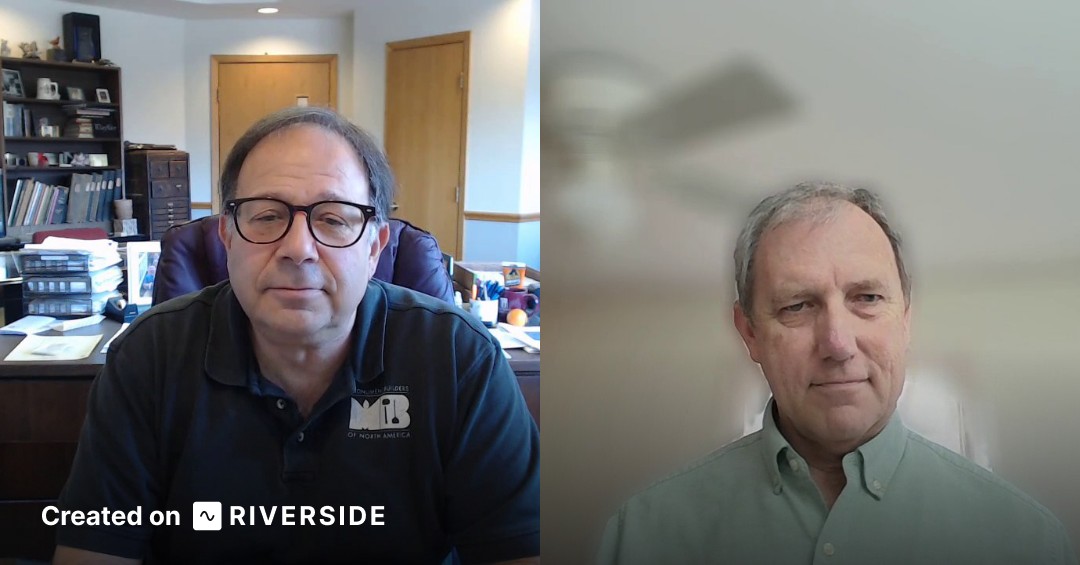
[00:00:25] Speaker B: Mike I'm your host, Mike Johns, CM AICA from the Johns Carabelli Company Cimarano Monuments and Flowers in beautiful Cleveland, Ohio. I'm also a past president of the Monument Builders of North America.
So joining me today to discuss typography is Brandon Bilister of the Monument Lettering Center. Hello Brandon, and welcome to the podcast.
[00:00:47] Speaker A: Mike, Good to see you again.
[00:00:49] Speaker B: Good to see you as well. To start us off, please share how the innovation that moved monument builders away from hand drawn and carved lettering to standardized fonts removes some of the creativity from the monument design process.
[00:01:05] Speaker A: Sure.
Well, as far as I understand from trade magazines and old books that I've collected over the years, at each point that the technology of lettering changed, it removed a bit more of what they considered skilled labor at the time and it sped things up quite, quite drastically. So the sandblast was a huge step forward. Obviously prior to that the pneumatic chisel was in the late 1800s a big, a big step forward in speeding things up. And in the 1960s the Stencil Press, late 1960s came out and removed hand cutting of stencil. And so at each step along the way, things sped up drastically. But it removed a large part of the hand drawing, the hand cutting, just that personal human touch from the process and replaced it with more and more standardized alphabets and less and less customization and personal touch.
[00:02:04] Speaker B: For sure. I've witnessed that firsthand. Absolutely.
So how have alternate letters and ligatures made their way back into the Monument Builders toolbox?
[00:02:16] Speaker A: Well, the toolbox, though it might not be used too much at this point, the toolbox has been, you might say, added to again with the addition of just font technology over the last 20 years. Really kind of helping bring back some of the old capabilities both in our industry with hand lettering like custom lettering capabilities or the look or feel of custom lettering. And in the, in the type industry, typography industry, they also had ligatures and custom letters and things that they would add into their fonts. And all of that was removed during the digital, digital era because there was no technology to support it. It was just your standard Alphabet, your standard letters, a whole bunch of symbols and, and, and things like that, but no ability to tap into any.
So with the advent of opentype fonts around the year 2000, Adobe and I believe Microsoft and perhaps a couple other companies were trying to kind of reach back in time and get all that they could out of some of the old typography.
And so that helped monument builders in that the kind of history of custom lettering and customizing to your liking any part of the letter you would like, adding swashes, adding different combinations of letters or resizing letters, things like that. Anything you could dream up you can add into the font file.
Now that doesn't mean that all the programs that you use might support those features. So that was a little hitch that took quite a while to kind of get ironed out.
[00:04:07] Speaker B: Sure. And we're not quite there yet, are we?
[00:04:09] Speaker A: Nope, not quite. Well, it depends. It depends on what software you use. And the monument industry in particular, I think partly because as an industry we had several companies building their own software instead of using kind of the standard software that was, you know, that was going to be made available later in the 90s and early 2000s.
We just are a smaller, a smaller industry than maybe the print industry or advertising industry. And so the industry moves more slowly. There's just fewer users and so iterations of software moves along more slowly.
[00:04:51] Speaker B: So again, you've mentioned that this technology has been around for about 20 years or so, I guess. Why hasn't the monument industry really embraced it? It's really about the software companies. What are your thoughts?
[00:05:05] Speaker A: Well, there's probably two part answer to that, I imagine. And one part would be the technology not being, being quite, quite there yet. And the other part is I think companies have been used to just typing in five seconds and being done with it. And you know, that's at least in large part how the industry, I think thinks of lettering now is. It's a kind of a secondary part of the process and not a primary part of the design. And so I think the industry has over, I mean, a hundred years or more had the, that feel of wanting to put that human touch or a little extra special, special thing here or there on the lettering that's just kind of slowly gone away. Some companies have maintained it and, and really view the lettering in high regard and something to be not just typed out and forgotten about, but, but really kind of played with and made as beautiful as possible.
[00:06:04] Speaker B: Sure. I mean as, and I'll attest as one of those companies that still holds lettering in that high regard and the fact that I did have pencil and triangle and divider and compass in my hands just yesterday doing some duplicate lettering work, you know, it's challenging because, as we know, it's time consuming, it's labor intensive, but the artistry is still really important. And, you know, for us especially, and I'm sure there's other folks in particular markets where duplicate work is really still very much being done, we're not one to, to compromise that. And I think that, you know, there's a lot of times where we'll see on a Facebook post, hey, can you, what is this font? Where did it come, you know, where can I find it? Can I buy it? And it's frustrating to me that there's so few folks that really still have the ability that, you know, if it's not in the computer, it's okay. I'm not afraid I can duplicate what's there because of the background that I've had. So, you know, we're very fortunate to be one of those companies that still has that ability for sure. And I'm glad to see that the technology is starting to advance to the point where the ability to take lettering out of the secondary consideration into primary focus is coming back. So I think that's great.
[00:07:39] Speaker A: Yeah, I think one of the things, maybe to even go back and answer a little bit of one of your previous questions that kind of has stalled the industry on really utilizing these features is a little bit of a fear that who's going to be able to match this?
[00:07:55] Speaker B: Right.
[00:07:56] Speaker A: If I make this any more complicated than modified Roman at 1 inch or 1.25 inches, then nobody is going to be able to, to match it. And so I better just use one of my, you know, standard three fonts, and it better be standard sizing. And, and I hope that there's, there's a growing number of people that really want to dedicate a little bit of time to just learning how to, how to match anything.
I mean, you don't have to hand draw it. You can draw it in the, in the computer. And it takes some time to learn how to do it, but, but it's definitely worthwhile. And I don't think the whole industry and our customers should suffer us not really making much effort just because it might be, you know, a little bit difficult to match. I think it's, it's worth putting time and effort into and anything can be matched.
Maybe not everyone in the industry has the, the, the desire or skill to do it, but surely, you know, most companies, if they have more than a handful of employees, might have someone artistic enough to kind of be growing that skill because it's not going to go away. The fonts are, the fonts are, are many these days and will become many more. And so it's more and more difficult to find them. And so at some point you have to stop looking and just sit down and, and draw the thing and, and be done.
[00:09:24] Speaker B: And, you know, I'm hopeful that the, the desire to learn is going to start to come back. You know, you see through programs like School of Hard Rocks, where folks get together and learn how to carve stone like the old days. And, you know, not completely like the old days because certainly our tools have advanced, but we're not just relying on sandblast and, and so on and so forth. We're getting dirty and we're, we're really being innovative and creative. And it's the creativity part that I think is certainly driving that group of folks. There's no doubt that there's a demand. It fills up, there's a waiting list.
But my point is that just as that the, the desire to develop those skill sets is on increase, I think we're going to start to see that desire on the lettering front as well. At least I certainly hope so. For sure.
[00:10:24] Speaker A: Yeah, I, I've had a little bit more interest. I've done a couple of kind of custom lettering jobs for folks seeing a little bit more interest in some in the industry to take the lettering as a serious part of the design and want to really explore that a little more and not just have your typical type it be done, it looks like everything else and move on to the next. But I really have a desire to see what, what we could do, what's possible, and, and that's fun and exciting.
[00:10:55] Speaker B: Yeah, it, it is. I mean, you know, for us, I can walk through pretty much any cemetery in our area and look at work. That's 50.
Well, more than 50, because 50 is my experience, but 100 years, 75 years old, what have you. And just by the lettering style used, I'm pretty good at picking out our work. And, you know, it's, it's really great to be able to have that differential between our competition and other monument builders to say, you know, our work stands out not just for the letter, not just for the design work and the style, but the lettering itself. You know, I'd like to see other people being able to say the same thing.
[00:11:47] Speaker A: Yeah. And that those, those areas of the cemetery you mentioned are, I think, the areas that the public likes to visit. You know, those sections that are not cookie cutter, where everything isn't the same.
Those are the areas that People want to, you know, they want to go and see and experience and it's like a park with artwork all over it and much different than a section of a cemetery now where you might find just your everyday font styles that you can find on your computer at home while you're making a invitation to your son's birthday card. You know, that's, that's kind of normal everyday stuff and there's no need to go to the cemetery to see that.
I think, I think as the industry hopefully is growing in this area of. Let's take, let's take this, this back. Let's, let's explore the lettering and make it different than what you might run into every day in your daily life. And I think as we do that, we'll find that there's hopefully more interest in those new sections of the cemetery as well. Not just for the uniqueness of the design, which a lot of people focus on the shape of the monument or maybe the etching, diamond etching or something that's on it.
[00:13:12] Speaker B: That's beautiful.
[00:13:13] Speaker A: But the thing as a whole is kind of unique and set apart from, from daily life.
[00:13:19] Speaker B: Yeah, for sure.
So where should a shop start if they want to experiment with this? What's a low risk way to do it without overcomplicating things?
Sure.
[00:13:30] Speaker A: Well, first you need the ability to do it, the technology. And so if you're using software that doesn't support OpenType features, you're going to have to do it all by hand, which you can do. And, and that's a, that's a worthwhile, as we've talked about already, a worthwhile endeavor. But you won't be able to use OpenType features. So OpenType alternates and ligatures and swashes, things like that. Unless you have kind of a standard design software that's available outside of our industry, like CorelDraw, Adobe Illustrator and there are a few others that support it. Memorial Designer is obviously built on CorelDraw and you can use the OpenType features in that software, but I believe that's the only industry software that uses these features. Once you have the capability, you know, you might try finding a font that has alternate characters or ligatures and adding maybe one.
Pick some part of the design that you'd like to embellish the lettering, maybe it's the family name or maybe the, the epitaph, and add like one or two of these alternate characters.
I think the, the downside of these things now is that you can, you can just overdo it really easily. Because it's fun. You're starting to play around. And you might just start adding these. Cause it's so easy. You can just add them in, just highlight and click on the dropdown. It's just really easy to overdo it. And then things look cluttered. Not all of the maybe alternate characters that have a swash on it, not all of them look good together.
And so I think just taking a little time to make sure that it actually looks good and it wasn't just fun to do is probably key. And just like a lot of things in life, you can kind of scale back after doing something.
You know, it's hard to tell at first if you've done too much, overdone it. And so maybe take a break, walk away, come back, look at it, remove a couple, and just make sure that things are tastefully done and use discretion rather than just kind of every possible thing I can change, you know, because it's fun to do and. But it should look good at the end of the day or it shouldn't or it shouldn't be done. Yeah.
[00:15:50] Speaker B: I think that the two adages that I would throw in there are just because we can doesn't mean we should. And less is more.
So, you know, just know when enough is enough and too much is. You know, sometimes it's easier to see that line once you've crossed it. And so scaling back is easy. But like you said, it's a, it's a.
It's a seasoning to the overall design. And in any recipe, too much seasoning just doesn't work.
[00:16:26] Speaker A: Yeah. We've all tasted a dish that had a couple dashes too many of salt. Right. And it's just, you know, what would add to the meal has now destroyed it and it's almost inedible. And so I think that's the, that's the terminology I used in the, in the article was seasoning of food. And don't over season your food. So don't over, over season the design with. With too much of these kind of features and customization of lettering. Or it just looks worse than if you had. Wouldn't have done it in the beginning.
[00:17:00] Speaker B: Yeah.
So how do you know what does good restraint actually look like in a real design? How do you know if you're just starting out? What advice would you give?
[00:17:11] Speaker A: Yeah, I would say just less is more. You know, try one and hold back, you know, and something fun like two O's overlapping is easy to do on your own if you don't have the ability to actually use OpenType features. Anyone can just grab two OS and kind of overlap them a little bit or connect them. That was done quite a bit historically in custom lettering, not just in our industry, but on book covers and things in the, in the 1800s, early 1900s.
And it just adds a nice kind of uniqueness in a, maybe even like a light, light hearted vibe. So something like on an epitaph, especially if you've got two lines and one of them's slightly longer than the other and you'd like to use the, the design principle of alignment and get those two lines to line right up without squeezing it, which you shouldn't, you shouldn't do.
You can maybe grab a couple of those O's and just change the kerning until they're overlapping. And now the, the two lines of that epitaph line up.
The whole design looks better and there's a little bit of a uniqueness thrown in, a little bit of customization that's out of the ordinary. We don't normally see that in our day to day life.
And it's a little bit of artistic flair, but maybe not too much.
[00:18:34] Speaker B: Yeah.
And I think that, you know, you're right, you saw it a lot when artists were painting signs and you know, doing more handwork and understanding where they could add, you know, today there's things, you know, what characters lend themselves, Rs, the tale of the Ls, Ts, Ks, there's all sorts of combinations that will provide opportunities to do it if you're, if you're paying attention and if you're, you're thoughtful in your, your purpose.
[00:19:11] Speaker A: Right. Yeah. And especially a K or an R at the end of a surname, you just drag that, you know that the tail or the leg of the R out or the K out a little bit more and the whole design will be, be potentially depending on the font and all that will be lifted. But you can just play around with it, try it. You know, I mess around with that stuff all the time and it's like, nope, that didn't work.
You know, go back, it did not add to the design it took away.
[00:19:37] Speaker B: Right.
[00:19:38] Speaker A: But if it's, if it's done well and you're willing to say, no, that was a mistake and not everything I do looks good, then there's no, there's no harm in playing around with it a little bit.
[00:19:48] Speaker B: No, absolutely. So do you think families actually notice or value these subtle design differences or is this more about professional pride within the industry?
[00:19:58] Speaker A: I really do. I think that even if, even if families customers wouldn't be able to express what it is about it, that that just makes it feel better. In this case, they might be able to because the lettering is pretty obvious. But I think that families overall really do notice the, the parts of the design that are done better than they could have have been done. If they go to a Monument Shops website and they're looking at someone's work versus another person's work, I think the design elements that are where there's a lot of care taken will stand out. Even if afterwards someone couldn't say it was this exact thing that really made it stand out, they will be able to generally be able to notice it. I mean, there are people that are colorblind and there are people that may be design blind and they just really don't see things like that. I think the average person sees the little nuances and sees the details that really make design stand out and feel set apart and different and unified.
They'll see those things and take note and say that something about the work done by this company, Company A just, it looked a little tighter, it looked a little more designed, and there's more care taken than company B. And so there's a perceived value there.
Even if it doesn't take you much more time, other than, you know, maybe on, on the off hours, learning more about design, learning more about lettering.
It doesn't take much time to click on a couple letters and use a dropdown to test out if, if it looks better, you know, a few seconds here and there. Once you're used to the, the technology and used to doing it, not a lot of time needed. But the upside can be, can be very big as far as value added to the customer.
[00:21:56] Speaker B: Sure.
[00:21:57] Speaker A: And of course, not every monument needs this. No, that would probably be too, too much if every time it's like, I got to do something custom to the letter. Yeah, no, not every time.
[00:22:09] Speaker B: But again, it's nice to have that tool in your toolbox. So when you have an opportunity, you know, you talk about how you could have it and not have it, and a customer will say, you know, I like this one better than that. I'm not exactly sure why, but I do. And that goes to, you know, kerning as well. Right.
A well kerned set of characters in an epitaph or in a family name or in any inscription. Many times a family will say, yeah, you know, that looks so much better than this, but I don't know why, what is it? And it's just the simple time that you took to kern and fix those spaces, because again, computer as good as they are, especially today, versus when we first started using them for lettering, they're still not perfect. There's still times where the human eye is still better at putting those characters together than the computer. You know, I encourage you, if you're not quite ready to be dealing with ligatures and flourishes and all those things that we're talking about here, spend a little more time on your kerning and see, you know, just how big an impact it'll make.
Right. So we know that families see it. They might not understand it, but generally speaking, they'll recognize it. But tell me a little bit more about the Monument Lettering Center. Your goal to digitize historic fonts and how monument builders can learn more about that process.
Sure.
[00:23:38] Speaker A: Well, you can always visit the
[email protected] I started it back in 2016, really with just the desire to create quality digital version versions of all of the historic fonts in the industry. I'd never seen anyone attempt to do that, and I always had wondered why. It seemed kind of like an obvious thing that was needed.
And I've always loved lettering since I was a kid and always wanted to design fonts. And so I thought, well, maybe I'm the guy to do it. So I started putting some time into it, and I'm about halfway done digitizing all of the known fonts that our industry has ever produced. Okay, maybe not quite halfway, but that includes all of the physical letter sets, metal and plastic, and the metal sheets, you know, used to get and do the. The rubs of the holes in McClellan sheets, as well as blueprint alphabets that were produced in the 1920s and 30s. I'm trying to do all of it so that if someone runs into something in the cemetery that's never been digitized, well, now it has been. And, you know, hopefully someone. A cemetery letter could just download it if they. If they want to purchase it. They don't have the skill or time to do it all by hand. They can just download it, type it out, and be done. And one of the things that I'm excited about doing in the future and have started to do is. Is add kind of new fonts for the industry based on kind of our old lettering styles, but with a lot more of this artistic bent, with this ability to customize it with open type features and really help push the industry forward in that regard. Now, of course, you can get, you know, a lot of fonts that already have These features that the print industry is putting out, but they're not always terribly useful for the industry for various reasons, including sandblasting and things like that. That's one of the things I'd like to start to turn more towards is doing more calligraphy type fonts that have the feel of being hand drawn.
[00:25:51] Speaker B: Right.
[00:25:52] Speaker A: Where you can swap out letters and these flourishes and maybe add some really beautiful, what looks like custom drawn calligraphy for epitaphs and things like this with still the click of a button.
And so you're not spending much more time, but you have a lot more potential value added and just beauty of the design overall.
I also do match lettering for about 150 or 160 shops throughout the US and Canada.
And so it is time consuming. It is a skill that you got to take a lot of time to learn how to do.
And typically you have to love it if you're gonna do it as much as I do.
[00:26:40] Speaker B: Absolutely.
[00:26:41] Speaker A: So I, I do 650 or 700 a year now for different shops. And so I see all the fun. You know, they send me the fun ones that are more complicated that were done in the, you know, 1920s or 30s or 40s.
And there is no font. There was never a font. It was someone's custom creation. And those are, those are fun. So I do do that. If you'd like to learn more that there's more information on both the font project and the inscription matching service on the website. But I also just let people know what the font is. If I know it's a font, you know, people reach out. I'll just tell.
[00:27:16] Speaker B: Sure.
Well, Brandon, kudos to you. I think that it's unfortunate that there are not more folks in our industry that are as focused on lettering and what it brings to the artistic table. But you, you are certainly becoming quite a loud voice in that regard, so I certainly appreciate it.
Speaking of voice, we did have one question from one of our longtime listeners. So I want to give a shout out to Steve Kaczmarcik from Tennessee, who asked this question of you, Brandon. So what programs are you using to help identify and are they user friendly? He's tried find my font with little to no success.
What do you recommend? Not just, you know, call Brandon, but before you call Brandon, what are some resources that the average Joe can use to try to figure out what they have?
[00:28:14] Speaker A: Sure. There's, there's a number of websites out there that you can use or programs you can get. I have not used them all. I know myfonts has one called what the font. There's a website called Font Spring and they have a tool called the Font Maturator. And the one that I found that probably is the least known but I have the best results with is called what font is what font is. Com and there's some pop up ads and things on there that, that you, you know, a little bit annoying but it, it gives me consistent, consistent results. When I upload an image there it's, if it's a font it's usually gonna, going to kick it back to me. I do use that a bit as a last resort because you've got to clean up, you know, the image and sometimes you have to just draw out a couple of the characters. So one of the tricks I use for that is I try and give it the little, the fewest amount of characters possible. The ones that are really going to help it ID that specific font rather than giving it as many characters as I can. Because you don't want to give it the characters that are shared with other fonts out there. You want to give it the ones that really set it apart. And you may not, you may not but if you do, if there are a couple characters that feel like man, I've never really seen yeah that unique feature of that before, that's the one that's going to, that's going to help get you there results and help the most. So prior to doing that I would, you know I've at this point I have a lot of them memorized but there's so many and so I'll often know it but forget the name and my workaround for that or, or I'll know another one that's like it and I can remember that name but I can just never remember the name of this one. So my workaround for that is I just have created over the years for myself a system of folders based on what type of font it is. If it's a script or a serif font or sans serif. And then within those folders I'll have some other, you know, if it's like Optima I have a folder for because I remember Optima and if it's similar to Optima I might not remember it but it's, you know there's going to be an image of it in that folder. So I use a website called Identifont.
Identifont.com has a just large collection of fonts listed. You can search. They've got a lot of tools they don't have Like a. You can't upload an image and search like you can with some of these other websites, but they have a large set of tools for identifying fonts. And so I'll hop on there and if I do see some similarities to another font, you can, you can search by similarity. So you can say what fonts are like Optima and it'll give you a list. You can go through that list. There's also a feature on there you can search by unique characters.
So if there is a, let's say if the, if a letter or a number four is closed at the top versus open at the top, they've got some things like that where you can just click.
They don't have every unique character you're ever going to find, but they've got a good amount of them that can help for those tricky ones that are harder to find. What else? There's one more feature on there that I use. Oh, they've got a really good feature for kind of tracking down a font without an image where they'll just give you a character and say, does it have an A? Like this is the uppercase A look like this or this or this or this. And then you just keep clicking and eventually, eventually it'll, it'll kick out a couple of options for you. I've used that with some success in the past when I'm just having a hard time finding something. So those are kind of the tools I use.
[00:31:45] Speaker B: Okay.
[00:31:46] Speaker A: Yeah.
[00:31:47] Speaker B: Well, I think that's been very helpful. Thanks, Steve, for the question. Next time I see you, I owe you a bourbon. And Brandon, you know I'd love to sit here and chat with you the rest of the day regarding lettering and fonts and all that good stuff and how to make it look a little bit different than your competition. But I feel like my producer is going to jump in at any second because we are out of time.
So I want to thank you, Brandon, for being today's guest from the Monument Lettering Center. We always appreciate hearing from you and learning about how lettering continues to shape the monument industry. The main issue of MB News is the design issue, so I encourage you to read this issue to learn more about MB and a member's award winning projects. I also encourage you to think about the projects you're working on now that you'd like to enter in the next upcoming Design Awards competition.
Or if you have a topic you'd like to have covered in a future podcast, please leave a comment.
So thank you for listening to today's installment of Monument Matters, MB&A invites you to stay connected through Facebook and LinkedIn, or visit us at www.monimalbuilders.org for upcoming events and webinars for MB&A and Monument Matters. I'm Michael Johns. Thank you for taking time out of your day to listen in.
If you found today's content worthwhile, and I'm sure you did, because I learned something, please share the link with a friend for comments and feedback. We'd love to hear from you, so please drop a note to infoonumentbuilders.org and please remember to mark your calendars now because the 2027 Monument Industry show will be in Mobile, Alabama February 25th to 28th.
So thanks again for joining Monument Matters. Brandon again, great to see and talk to you. Until next time, stay well.
[00:33:29] Speaker A: Thanks, Mike.
[00:33:30] Speaker B: Take care. Sam.